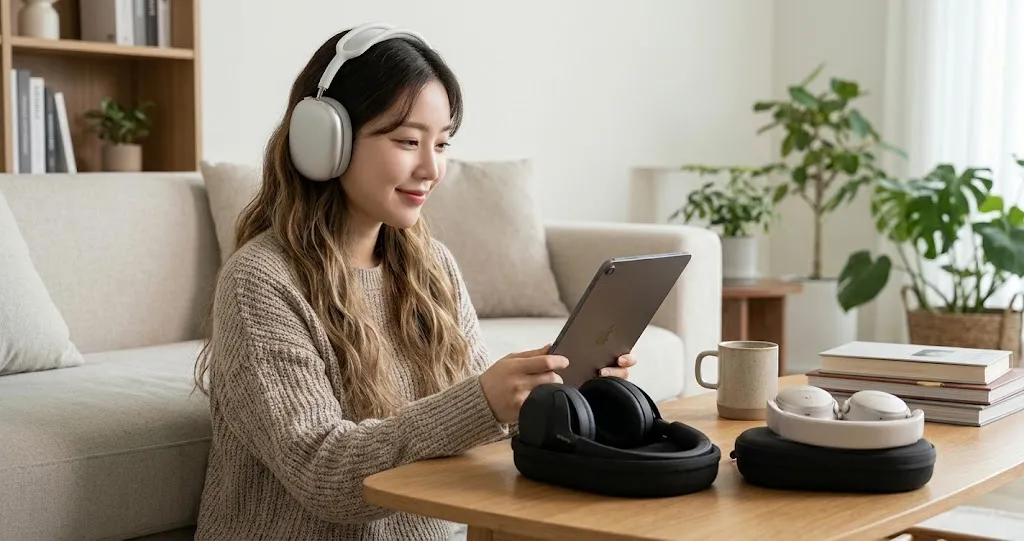
A good pair of noise cancelling wireless headphones should fit the way you actually listen. That might mean moving between a phone and a laptop, settling into a long flight, or finding something comfortable enough to leave on while you work.
These three options approach that decision differently. Apple makes the strongest case when its device ecosystem is part of your everyday routine. Bose deserves a close look if comfort is your starting point. Sony is worth comparing if you want a lighter headset with several audio-format options. None is automatically the right purchase just because it has the longest feature list.
Three Headphones at a Glance
| Product | Best for | Pros | Cons | Before buying |
|---|---|---|---|---|
| Apple AirPods Max 2 | People already using several Apple devices | Apple-focused integration; USB-C audio option | Heavier than the Sony model here | Check feature compatibility with your devices |
| Bose QuietComfort Ultra Headphones (2nd Gen) | Buyers putting comfort near the top of their list | Foldable design; multiple listening modes | Immersive Audio changes the battery estimate | Try the fit and compare listening modes |
| Sony WH-1000XM6 | Buyers comparing weight and codec flexibility | About 254 g; AAC, LDAC and LC3 support | Some capabilities depend on the connected device | Check your phone’s supported audio formats |
Best for: Multiple Apple devices
Pros: Apple-focused integration; USB-C audio option
Cons: Check weight and feature compatibility
Bose QuietComfort Ultra Headphones (2nd Gen)
Best for: Comfort-focused shopping
Pros: Folding design and multiple listening modes
Cons: Battery estimate varies with mode
Best for: Weight and codec comparison
Pros: About 254 g and several codecs
Cons: Capabilities depend on the source device
1. Apple AirPods Max 2: Start With Your Devices
My favorite part of using Apple’s over-ear headphones has been how naturally they fit into my Apple setup. Moving between my phone and computer has felt smooth. I’ve also worn them for several hours and on flights, and found the comfort and noise cancellation very good. They felt lighter on my head than I expected.
That is a personal experience with Apple’s headphones, rather than a controlled comparison of these three current models. For this purchase, the important question is whether you will use the Apple-specific conveniences often enough to value them.
Pros
- A sensible shortlist option when an iPhone and Mac are already central to your day.
- A wired listening option alongside everyday wireless use.
Cons / before buying
- Apple lists 386.2 g, so perceived comfort should not be confused with low measured weight.
- Check your devices and software against the requirements of the features you want. Do not assume every Apple feature works on Android.
View Apple AirPods Max 2 on Amazon
2. Bose QuietComfort Ultra Headphones (2nd Gen): Put Comfort on the Shortlist
What I have liked about wearing Bose headphones is the comfortable, light-feeling fit and very soft ear cushions. Noise cancellation has also been very good in my experience, making the overall experience enjoyable. Fit is personal, though: glasses, head shape and how long you wear headphones can all change what feels comfortable.
For the current second-generation Ultra model, Bose documents a folding design, USB-C digital audio and several listening modes. Those are useful things to compare without turning my comfort impressions into a claim that everyone will prefer this model.
Pros
- A folding design is useful when you want headphones to take up less room between listening sessions.
- USB-C audio adds another way to connect, beyond Bluetooth.
Cons / before buying
- Bose’s advertised battery figures change with listening mode; check the estimate for the mode you expect to use.
- The Driftwood Sand finish does not establish better audio or comfort than another color. Confirm the exact second-generation listing before buying.
View Bose QuietComfort Ultra Headphones (2nd Gen) on Amazon
3. Sony WH-1000XM6: Compare the Practical Details
I have not personally tested this Sony model. Its published specifications make it a useful comparison point if headset weight and audio-format support matter to you. Sony lists approximately 254 g and support for SBC, AAC, LDAC and LC3. Which format you can actually use depends on both ends of the connection.
That does not prove that it sounds better than the other two. A format name is one part of the setup, not a substitute for deciding whether you enjoy the fit, controls and sound.
Pros
- Its listed weight is lower than that of the Apple model in this comparison.
- Several supported codecs offer options for compatible devices.
Cons / before buying
- A supported codec is not a guarantee that your phone will use it.
- Battery estimates depend on settings and codec. Sony’s guide lists different figures for LDAC and AAC with noise cancellation enabled.
View Sony WH-1000XM6 on Amazon
How to Choose Without Chasing a Universal Winner
Start with the inconvenience you want to remove. If constantly changing devices is your frustration, compare the connection behavior with your actual phone and computer. If you remove headphones after half an hour, make fit your priority. If you travel, consider the carrying case and cable setup as well as the headphones themselves.
Try them with your usual glasses if you can. Check whether the ear cups sit comfortably around your ears and whether the controls feel easy to find. A short store trial cannot promise all-day comfort, but it can reveal an immediate fit problem.
You also do not need to upgrade a pair that already works well. A clear reason to replace it is more useful than an impressive feature you rarely use.
Frequently Asked Questions
Which headphones make the most sense for iPhone users?
Start by comparing how much you value Apple’s device integration. If you also use a Mac or iPad, that convenience may matter more than a feature count. It does not make the other two unsuitable: fit, controls and your preferred connection setup still deserve attention.
What should Android users check before buying?
Check the manufacturer’s feature requirements, app support and supported connection formats for your particular phone. Basic Bluetooth listening and an advanced ecosystem feature are different promises. Buy for the capabilities your setup can use, rather than a feature that requires a device you do not own.
Can noise cancelling headphones block voices completely?
Do not buy with complete silence as the expectation. Fit, the surrounding sound and the listening mode all matter. If nearby conversations are your main concern, try the headphones in a relevant environment when possible; a manufacturer’s broad noise-cancelling claim does not answer that specific question for you.
Can you use these headphones with a cable?
Yes, but compare the supported connection and required cable for the exact model. Apple and Bose document USB-C audio, while Sony documents a headphone-cable connection. Do not assume that a charging port means every headset supports the same wired audio path.
How should you compare battery-life claims?
Read the conditions, not just the largest number. Listening modes, codec and other settings can change the estimate. The useful comparison is the mode you plan to use, with enough margin for your own routine; these are manufacturer estimates, not battery measurements from this article.
What matters most for commuting and travel?
Comfort, carrying space, easy controls and a connection plan that fits your trip. Consider whether you need to hear announcements and whether the journey involves a wired entertainment system. Keep your surroundings in mind when walking outside, rather than treating noise cancellation as something to maximize everywhere.
Take what’s useful. Choose what fits.
Back to the journal ↗